Learning to Be the Warmth in My Own Winter
In January 2024, the furnace went out.
It was the kind of cold that settles into the walls. The kind that makes you aware of every draft, every thin place in a home. My ex was away on a business trip in Arizona. I was home alone with the kids.
And I panicked.
Not because I was incapable.
Not because I didn’t know how to dial a number.
But because I was the only adult physically there, and the heat was gone.
I remember calling him. I remember trying to hold it together. I remember the sound of frustration on the other end of the phone — “What do you expect me to do from all the way over here?”
And I remember feeling smaller.
I wasn’t asking him to physically fix the furnace from Arizona. I was asking for partnership. For reassurance. For someone to steady me while I steadied the kids.
Instead, the situation became heavier. The cold wasn’t just in the air — it was in the tone, the irritation, the disconnect.
At the time, I questioned myself.
Was I overreacting?
Was I being dramatic?
Should I have just handled it without calling?
But here’s what I understand now:
There is a difference between being incapable and being unsupported.
I wasn’t helpless.
I was overwhelmed.
There’s a difference.
Fast forward to now.
Another winter.
Another storm.
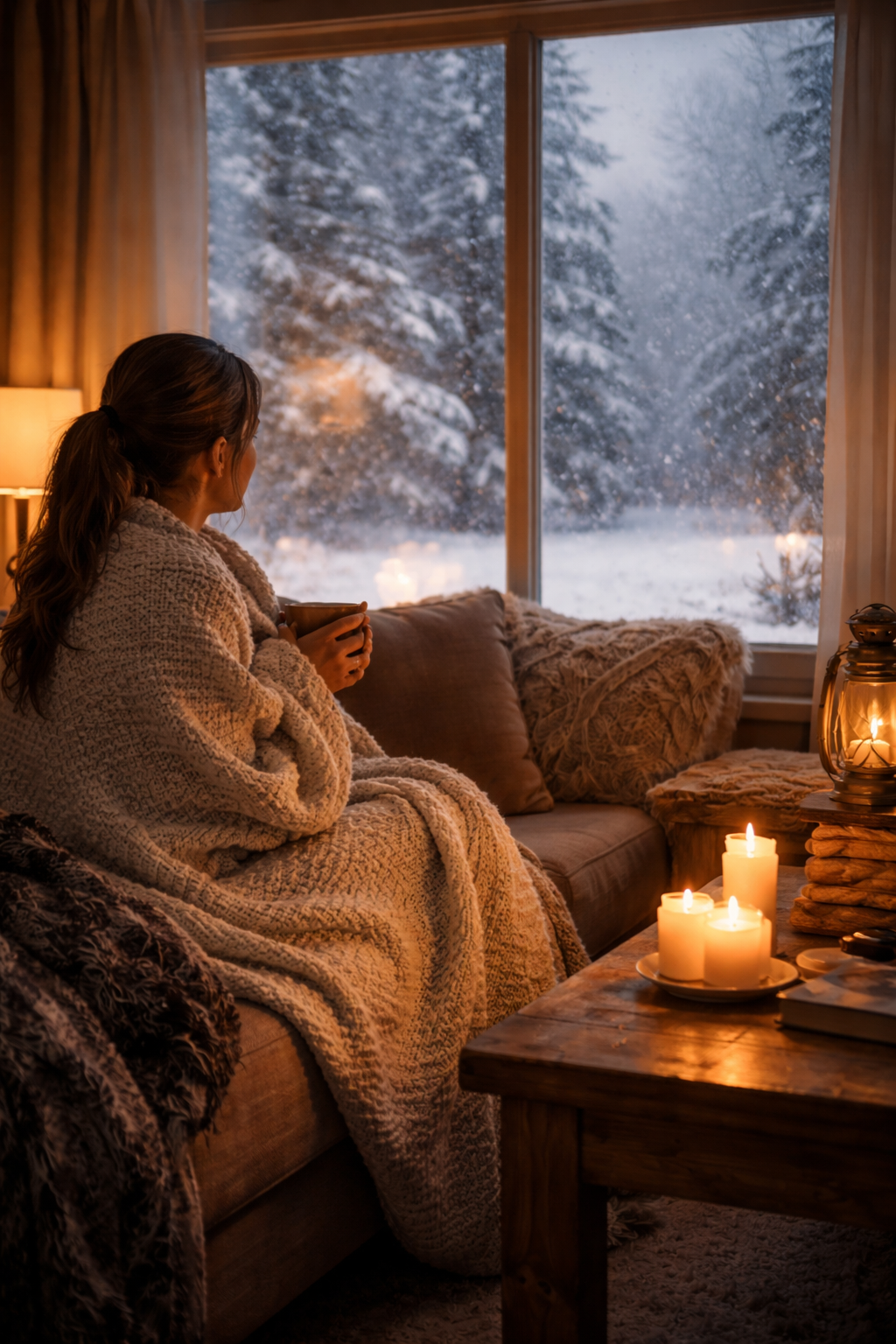
A severe blizzard rolled in. The power flickered once already. The wind howled the way only New England wind can. The kind that rattles windows and makes you hyperaware of being responsible for little humans inside those walls.
And something unexpected happened.
I didn’t panic.
I charged my phone.
I gathered blankets.
I set candles aside just in case.
I made sure we had board games ready.
I thought ahead instead of spiraling.
I was focused.
I was relaxed.
And somewhere between the flicker of the lights and the sound of snow hitting the siding, I realized something:
I don’t panic the way I used to.
Not because life is easier.
But because I trust myself now.
Back in January 2024, the furnace going out felt like proof that I couldn’t handle things alone. It felt like confirmation of fear — that I needed someone else to steady me in order to steady my children.
But the truth is… I always could handle it.
What I couldn’t handle was carrying the crisis and someone else’s frustration at the same time.
When you remove the emotional instability from the equation, what’s left is just the problem.
And problems can be solved.
This winter, the storm outside isn’t mirrored by a storm inside my nervous system.
There are no emotional landmines.
No walking on eggshells.
No bracing for irritation layered on top of stress.
Just snow.
Just preparation.
Just calm.
And maybe that’s what growth actually looks like.
Not loud independence.
Not dramatic declarations of strength.
Not proving anyone wrong.
Just quiet confidence.
The kind that doesn’t need applause.
The kind that doesn’t even need to be announced.
The kind that shows up during a blizzard and says,
“We’ve got this.”
There’s something symbolic about it — the furnace losing heat last January, and me feeling like I was losing stability with it.
And now?
The heat inside this home isn’t dependent on anyone else.
It’s steady.
It’s prepared.
It’s safe.
Hunter is older now. He watches how I respond. He absorbs the emotional temperature of the house. And during this storm, he doesn’t see panic. He sees readiness.
He sees calm.
And that might be the most important part of all.
I didn’t become strong because someone failed me.
I became steady because I stopped looking for rescue.
There’s a difference between falling apart and realizing you were carrying too much.
There’s a difference between weakness and overload.
There’s a difference between needing partnership and being incapable.
January 2024 taught me what it feels like to be unsupported in a crisis.
This winter taught me I don’t collapse without it.
The storm outside can rage.
But inside?
It’s quiet.
It’s warm.
It’s steady.
And so am I.
